
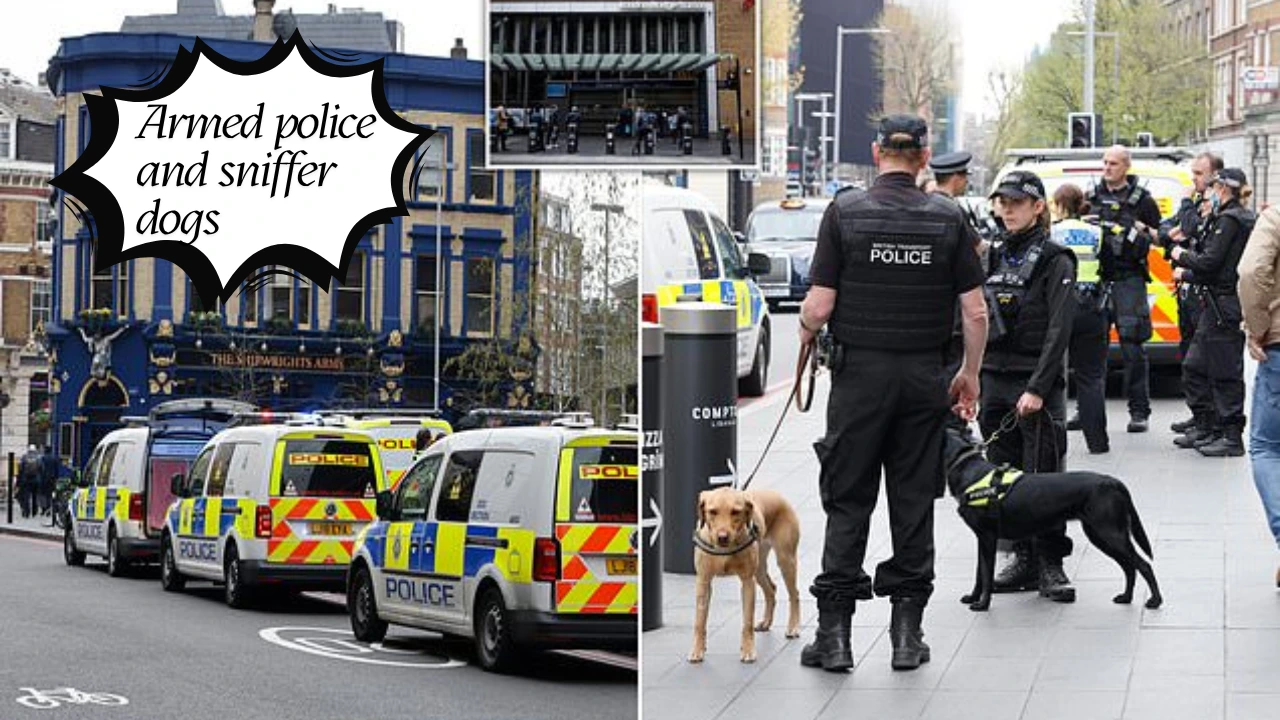
Armed police and sniffer dogs’ descend on London Bridge station as man behaves ‘suspiciously, On Monday evening, what began as a routine weekday service at London Bridge station turned into a tense episode of precautionary police activity. Passengers on a train arriving into the station flagged the behaviour of a man who was reportedly acting in a way described as “suspicious”.
Within minutes, officers from the British Transport Police (BTP), supported by armed personnel and sniffer dogs, converged on the platform as the station was evacuated and train services disrupted. Though no crime was ultimately identified, the event offers a snapshot of how counter-terror and public-safety protocols are now embedded into major transport hubs.
Armed police and sniffer dogs’ descend on London Bridge station as man behaves ‘suspiciously-Overview
| Article on | Armed police and sniffer dogs’ descend on London Bridge station as man behaves ‘suspiciously |
| Location | London Bridge Station, Central London |
| Incident | Man reported acting suspiciously on a train |
| Response | Armed police and sniffer dogs deployed; station briefly evacuated |
| Outcome | Nothing suspicious found; no arrests or injuries |
| Status | Station reopened and services returned to normal |
The incident: quick escalation of standard suspicion
Around 6.30 pm, a man on a train entering London Bridge station was observed by staff or fellow passengers behaving unusually. According to BTP, the train was halted at the station so that a full search of both the carriage and the platform could be conducted as a precaution.

Witnesses reported seeing armed officers and sniffer dogs arriving on site, with the station concourse and platforms subject to temporary restrictions. Some passengers were held at barriers outside the station while the operation took place.
Why such strong resources for “suspicious behaviour”?
In major transport hubs like London Bridge, the threshold for deploying firearms or specialist resources is not limited to confirmed threats. Rather, the presence of vulnerable, crowded infrastructure means that even ambiguous reports can trigger extensive safeguards. The BTP’s decision to halt the train, sweep the platform and deploy assets such as sniffer dogs reflects the layered nature of today’s counter-terrorism readiness. Rail operators issued warnings to passengers and advised alternate travel routes while the incident was ongoing. One operator noted that services through London Bridge might remain delayed.
Impact on passengers and operations
For commuters and travellers at the station that evening, the disruption came unexpectedly and under stressful circumstances. Platforms were cordoned off, announcements were limited, and many were redirected or delayed. According to reports, the station returned to normal operations only after some delay, with services still recovering for a while.
Lessons learned and broader implications
1. Vigilance matters
Though no crime was ultimately discovered at London Bridge station, the incident underscores how individual vigilance by staff, passengers or CCTV teams can trigger a chain of events that protects public safety.
2. Preparedness is key
Transport hubs must operate with a mindset of ‘what if’. The deployment of sniffer dogs, armed officers and rapid evacuation indicate a culture of readiness. For travellers, it’s useful to remember: when announcements refer to “police activity” or “precautionary searches”, they may reflect something less visible than a headline-grabbing threat.
3. Communication and crowd management
In dense stations, the ability to manage large numbers of passengers redirecting, calming, and informing is crucial. Delays and evacuations can create secondary risks (crowding, confusion). Ensuring clear signage, audible announcements and trained staff is vital.
4. Travel planning in the moment
If you find yourself in the middle of such an incident: stay calm, follow instructions from station staff or police, expect delays or re-routing, and if your journey is time-sensitive, check alternative routes or modes of transport.
Security in a Changing Landscape
Major transport stations, especially in capital cities, continue to be targets for disruption whether terrorist-driven or opportunistic criminality. While the incident at London Bridge station ended without injury or identified threat, it reinforces the “precaution first” mindset now embedded in transport security regimes.
Frequently Asked Questions
Monday evening around 6:30 pm.
No, no injuries or arrests were made.
As a safety precaution under standard counter-terror procedures.
Yes, briefly evacuated while checks were carried out.
Nothing suspicious, the station reopened soon after.